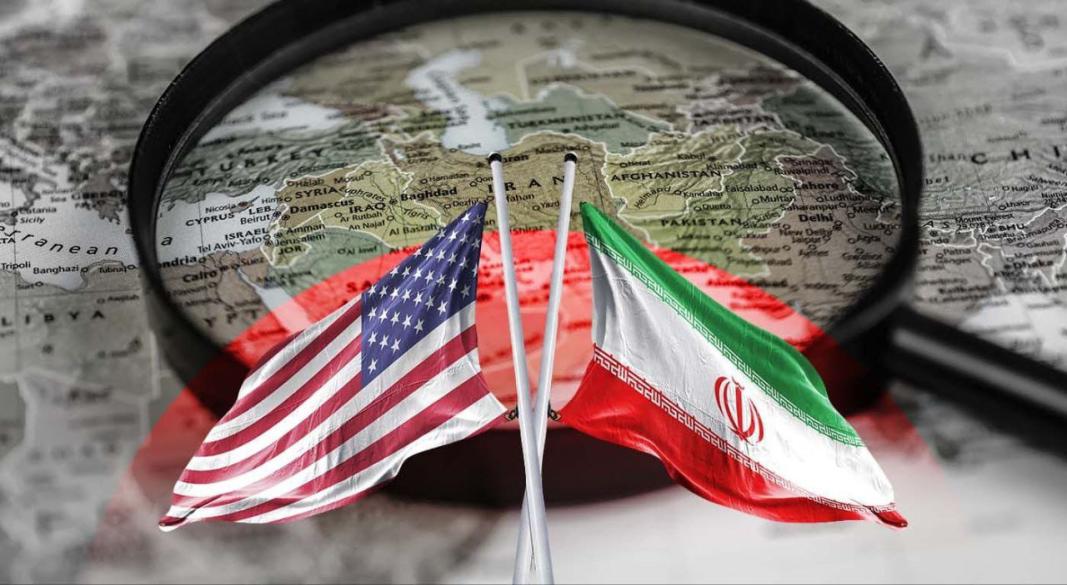
Muscat / Tehran / Washington — (February 6, 2026), Today, in the warm halls of a palace in Muscat, Oman, diplomats from two of the world’s most powerful nations — Iran and the United States — quietly began indirect talks aimed at defusing one of the most dangerous geopolitical flashpoints of our time. The world watches with bated breath as these negotiations unfold, hoping that conversation will triumph over confrontation.
The mood is cautious. Neither side has offered sweeping optimism, but both appear committed, at least for now, to keeping dialogue alive.
The Faces Behind the Headlines:
Leading Iran’s delegation is Foreign Minister Abbas Araghchi, a seasoned diplomat known for his calm but firm negotiating style. Araghchi arrived in Muscat with a message: Iran is entering these talks “with open eyes,” determined to defend its rights and dignity, and to secure relief from crippling sanctions.
On the U.S. side, top officials including Middle East envoy Steve Witkoff and senior advisers are present. Their mission is no less daunting: to rein in Iran’s controversial nuclear activities while pressing broader concerns — from missile development to support for armed groups in the region.
These are not casual conversations. They are the product of painstaking back-and-forth diplomacy — and they come against a backdrop of years of mistrust, military pressure, and political brinksmanship.
Why This Moment Matters:
The talks revolve primarily around Iran’s nuclear programme, a source of deep contention since the United States withdrew from a landmark nuclear deal years ago. Washington wants the conversation to tackle not just nuclear activities but also Iran’s ballistic missiles and its role in regional conflicts — issues Tehran has firmly rejected as off-limits.
For ordinary people — whether in Tehran, Washington, or anywhere along the volatile arc of the Middle East — the stakes could not be higher. A breakdown in negotiations risks widening an already tense confrontation, with unknown human costs. A breakthrough, on the other hand, could ease sanctions, curb militarization, and bring a measure of stability to a region long scarred by conflict.
A Backdrop of Tension, Fear, and Hope:
These talks come at a time of heightened anxiety. The U.S. military has bolstered its presence in the Gulf, and Iran has signalled both defiance and willingness to negotiate on nuclear enrichment levels — a delicate balancing act between safeguarding its strategic interests and calming global fears.
Recent events, including security incidents at sea and continued protests within Iran over economic hardship and political repression, have amplified the sense that this moment could sway toward either war or peace.
Oman’s Quiet Role as Mediator:
Often overlooked in global headlines, Oman plays an outsized role in this drama. The small Gulf nation has acted as a discreet bridge between Tehran and Washington when tensions ran high — a trusted host that both sides agreed could facilitate talks away from the glare of international capitals and political grandstanding.
For Muscat, this is more than diplomacy — it is a test of trust, patience, and hope that negotiation can achieve what threats have so far failed to deliver.
What Comes Next:
At this stage, there are no public announcements of major breakthroughs. The initial sessions are more about setting ground rules, clarifying positions, and building enough confidence for deeper discussions.
Yet even this first step — leaders from two estranged nations sitting at the same table and talking — carries symbolic weight. It signals that even when tensions run high, diplomacy remains a fragile but vital path to peace.
For millions of people living under the shadow of potential conflict, that alone is a reason to watch closely — and to hope.
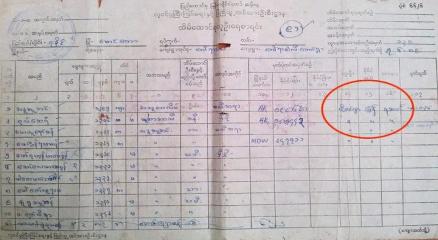
Rohingya activist Ro Nay San Lwin has shared government-issued family registration documents as evidence that Myanmar authorities once officially recognized the term “Rohingya”, before later replacing it with “Bengali.” In a statement written in Burmese, Ro Nay San Lwin explained that the household registration document was originally issued in 1989 under the military government, at a time when Rohingya identity was clearly recorded. However, after the formation of the State Law and Order Restoration Council (SLORC) in 1993, authorities reportedly began a process of regularly collecting and reissuing household lists every six months. During this process, earlier records were confiscated and replaced with new documents labeling Rohingya families as “Bengali.” He stressed that when the state accepted the Rohingya designation in official records, it did so knowingly and formally. He criticized later claims by authorities denying the existence of the Rohingya, while simultaneously arguing that the community merely identified as “Muslims” or “Mohammedans.” “Be honest,” he urged, accusing the state of deliberately rewriting identity for political purposes. Human rights advocates say such documentary evidence directly challenges Myanmar’s long-standing narrative that Rohingya are recent migrants, and supports claims that identity erasure was a state-led process tied to discrimination, statelessness, and persecution that later culminated in mass atrocities.
The Rohingya are not a people without history. They are a people whose history has been deliberately erased. From centuries-old documentation to post-independence state recognition, and finally to statelessness and genocide, the Rohingya story is one of systematic exclusion—now under examination at the world’s highest court, the International Court of Justice (ICJ). Centuries of Documentation Preserved Historical records proving the existence of the Rohingya did not disappear by accident. Many of these documents—spanning centuries—have been preserved and compiled by Ek Khaale (meaning “Once Upon a Time”), an independent historical archive dedicated to documenting Rohingya history through original sources, colonial records, travel accounts, and state documents. The archive provides consolidated evidence showing that the Rohingya identity existed long before modern political narratives attempted to deny it. 1799: Buchanan-Hamilton’s Written Proof One of the earliest and most cited records comes from 1799, when British surgeon and scholar Francis Buchanan-Hamilton documented a Muslim community in Arakan whom he identified as “Rooinga.” He wrote that these people called themselves natives of Arakan and described them as Muhammadans (Muslims). This documentation—archived and referenced by Ek Khaale —predates British colonial administration and directly contradicts claims that the Rohingya identity was recently invented. Post-Independence State Recognition Following Burma’s independence in 1948, the Rohingya were officially recognized by the state: First President Sao Shwe Thaik publicly acknowledged the Rohingya as an Indigenous ethnic community of Arakan. Rohingya representatives served in Parliament and participated in national political life. Government offices and official discourse used the term “Rohingya” without dispute. These facts are supported by state records and historical documentation preserved by independent researchers and archives, including Ek Khaale. 3 January: Rohingya National Day In the early years of independence, the Rohingya observed 3 January as Rohingya National Day, marking their recognized status within the Union of Burma. This observance was known to state authorities and reflected the Rohingya’s political and social inclusion at the time—long before their later exclusion. 25 September 1954: State Radio Acknowledgment A decisive piece of evidence came on 25 September 1954, during the government of Prime Minister U Nu. On that date, the Burma Broadcasting Service (BBS)—the official state radio—broadcast the term “Rohingya.” This state-controlled public acknowledgment confirms that the Rohingya identity was officially recognized at the highest level of government. This broadcast, referenced in historical archives including Ek Khaale, is irrefutable proof that: The Rohingya identity was recognized by the Burmese state Denial emerged later as a political strategy Claims of self-invention are historically false From Recognition to Erasure The shift from recognition to repression began after the 1962 military coup led by General Ne Win. Over time, military regimes replaced inclusion with exclusion. The 1982 Citizenship Law formalized this erasure by stripping the Rohingya of citizenship, excluding them from the list of “national races” despite overwhelming historical evidence. Statelessness was not an accident—it was policy. From Statelessness to Genocide Decades of discrimination escalated into atrocity. The Rohingya faced: Severe restrictions on movement and marriage Denial of education and healthcare Forced labor and arbitrary detention State-sponsored hate campaigns labeling them “illegal Bengalis” In 2016–2017, Myanmar’s military launched so-called “clearance operations.” Villages were burned, thousands killed, women raped, and more than 740,000 Rohingya fled to Bangladesh. The United Nations later concluded that these acts showed genocidal intent. Before the International Court of Justice In 2019, The Gambia brought a case against Myanmar at the ICJ under the Genocide Convention. In January 2026, the Court began hearing the merits of the case, with 11 States intervening—underscoring the global significance of the Rohingya genocide. Denial of Identity: The First Stage of Genocide Genocide does not begin with killing—it begins with denial. The erasure of Rohingya identity, history, and name laid the groundwork for statelessness, displacement, and mass violence. Yet centuries of documentation—preserved by archives like Ek Khaale —expose this denial as deliberate falsehood. Conclusion: History Is Documented, Justice Is Due The Rohingya are an Indigenous people of Arakan. Their existence is recorded in centuries-old documents, acknowledged by the Burmese state, and now recognized in international legal proceedings. History has been preserved. The evidence is clear. Now, justice must follow.
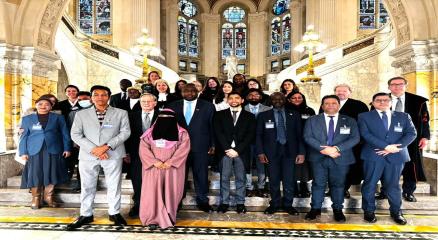
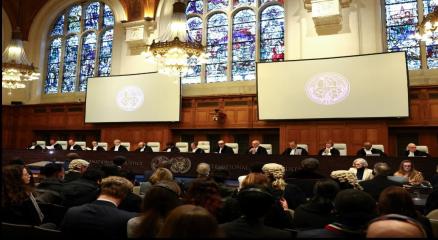
The Hague, Netherlands — January 13, 2026 — Public hearings opened Tuesday at the International Court of Justice (ICJ) in a landmark genocide case brought by The Gambia against Myanmar, where Gambian representatives delivered harrowing accounts of atrocities allegedly committed against the Rohingya community. In the first major day of oral arguments on the merits of the case — which features 11 intervening states supporting The Gambia’s interpretation of the 1948 Genocide Convention — Attorney General and Justice Minister Dawda Jallow told judges that Myanmar’s security forces subjected the Rohingya to “the most horrific violence and destruction one could imagine.” “It is not about esoteric issues of international law. It is about real people, real stories, and a real group of human beings,” Jallow said. He charged that Myanmar’s military deliberately targeted the Rohingya minority for destruction, a violation of its obligations under the Genocide Convention. Gruesome Testimony and Allegations Legal counsel for The Gambia presented testimony and evidence from survivors and fact-finding missions detailing atrocities that paint a grim picture of the 2017 military “clearance operations” in Rakhine State. According to these accounts: Rohingya villages were burned to ashes, homes destroyed, and agricultural land razed — forcing families from their ancestral lands. Witnesses recounted gang rapes, sexual mutilation, and instances where infants and children were killed or burned alive during attacks. Hundreds of thousands of Rohingya fled in fear for their lives, pouring into neighboring Bangladesh, where refugees continue to live in overcrowded camps. “These horrific scenes are not isolated,” said lead counsel Paul Reichler, urging the court to find that a pattern of conduct described by international human rights investigators meets the legal definition of genocide — including intent to destroy, in whole or in part, a protected group. Grounds for Legal Relief The Gambia asked the ICJ to declare that Myanmar has breached its obligations under the Genocide Convention by failing to prevent and punish genocidal acts and to order: Immediate cessation of internationally wrongful acts; Full reparations to victims of the Rohingya community; Guarantees of non-repetition; and Measures to ensure accountability and justice for survivors. Case Background and Broader Implications Myanmar has consistently denied that its military’s 2017 offensive amounted to genocide, framing the operations as a counter-terrorism response. The proceedings at the ICJ, the United Nations’ principal judicial organ, do not prosecute individuals but instead assess state responsibility under international law. The hearings, which will run through 29 January, are expected to include testimony from experts and further documentary evidence. Legal analysts note that the outcome could influence other international genocide cases pending before the court. For Rohingya survivors attending the hearings, the courtroom represents more than legal arguments — it is a moment to have their suffering acknowledged on the world stage and to seek justice after years of displacement and loss.
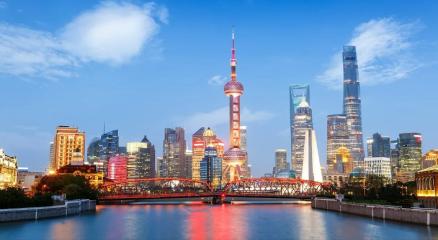
China’s economy is facing increasing challenges as growth slows, domestic demand weakens, and confidence among businesses and consumers remains fragile. Despite government efforts to stabilize the economy, structural problems continue to weigh heavily on the world’s second-largest economy. Under the leadership of Xi Jinping, China has shifted its economic priorities toward national security, state control, and technological self-reliance. Analysts say this shift has reshaped the business environment and contributed to uncertainty in key sectors. Property Crisis and Weak Consumption One of the biggest pressures on the economy remains the prolonged property crisis. Major real estate developers have struggled with debt, leading to stalled construction projects and falling home prices. As property accounts for a large share of household wealth, the downturn has reduced consumer spending and confidence. Retail sales growth has remained uneven, while youth unemployment continues to be a concern, limiting spending power and economic momentum. Manufacturing and Exports Under Strain China’s manufacturing sector, once the engine of rapid growth, is also showing signs of strain. Global demand has softened, and trade tensions with Western countries have affected exports. Some multinational companies are diversifying supply chains away from China, adding further pressure. At the same time, factories face rising costs and lower profit margins, especially in traditional industries. Government Response Beijing has introduced stimulus measures, including interest rate cuts, support for local governments, and incentives for key industries such as electric vehicles and high technology. However, economists say these measures have so far failed to deliver a strong rebound. Concerns remain over high local government debt and limited room for aggressive stimulus without increasing financial risks. Global Implications China’s economic slowdown has global consequences. As a major trading partner for many countries, weaker growth in China affects global supply chains, commodity prices, and emerging markets that depend on Chinese demand. International institutions have lowered growth forecasts for China, signaling that the era of consistently high growth may be over.
Over the past four years, the global alcohol industry has faced an uncomfortable reality: its long-assumed stability is no longer guaranteed. Since around 2021, more than US $830 billion has been wiped off the market value of major alcohol companies, a dramatic shift for an industry that once seemed immune to changing tastes and economic cycles. Behind this headline number lies a deeper human story — one about changing lifestyles, health awareness, and generational values, rather than just falling profits. What the $830 billion loss really means It is important to clarify what this figure represents. The $830 billion is not money lost directly from sales or revenue. Instead, it reflects a drop in stock market valuation — the collective value investors assign to large beer, wine, and spirits companies. In simple terms, investors are less confident than they were four years ago about how fast the alcohol industry will grow in the future. That loss of confidence has translated into falling share prices across the sector. A quiet shift in how people drink One of the most talked-about reasons for this change is how younger generations, especially Gen Z, approach alcohol. Compared with previous generations at the same age, many young adults today: Drink less frequently Are more likely to limit consumption rather than drink heavily Choose non-alcoholic or low-alcohol alternatives Avoid alcohol altogether for health, religious, or personal reasons For many in Gen Z, alcohol is no longer central to social life. Mental health awareness, fitness culture, rising prices, and the fear of long-term health effects all play a role. Social media has also changed how people socialize, reducing the traditional role of bars and nightlife in some communities. However, the picture is not black and white. In some countries and age groups, Gen Z consumption has stabilized or even increased slightly. The key difference is how they drink — more selectively, more consciously, and often less excessively. It’s not only about Gen Z Blaming Gen Z alone would oversimplify a complex situation. The alcohol industry’s decline in market value is also shaped by: Economic pressure: Inflation and higher living costs have reduced disposable income worldwide. Rising production costs: Energy, transportation, and raw materials have become more expensive. Health and wellness trends: Across all age groups, people are questioning alcohol’s role in their lives. Cultural change: Drinking is no longer seen as essential to celebration or success, especially among younger adults. These factors together have forced investors to rethink whether alcohol companies can grow the way they once did. How the industry is responding Alcohol producers are not standing still. Many have begun: Investing in alcohol-free and low-alcohol drinks Focusing on premium products rather than volume sales Marketing moderation instead of excess Expanding into new beverage categories Some companies now openly admit that the future of alcohol lies not in selling more drinks, but in adapting to how people want to live today. Is it turning point or an end? The $830 billion decline is best understood as a turning point, not a collapse. Alcohol is unlikely to disappear, but its role in society is changing. For younger generations, drinking is becoming a choice rather than an expectation. For the industry, success will depend on whether it can respect that choice and evolve with it. What is happening now is more than a business story — it is a reflection of changing human values, where health, balance, and personal control matter more than tradition or habit.



Muscat / Tehran / Washington — (February 6, 2026), Today, in the warm halls of a palace in Muscat, Oman, diplomats from two of the world’s most powerful nations — Iran and the United States — quietly began indirect talks aimed at defusing one of the most dangerous geopolitical flashpoints of our time. The world watches with bated breath as these negotiations unfold, hoping that conversation will triumph over confrontation. The mood is cautious. Neither side has offered sweeping optimism, but both appear committed, at least for now, to keeping dialogue alive. The Faces Behind the Headlines: Leading Iran’s delegation is Foreign Minister Abbas Araghchi, a seasoned diplomat known for his calm but firm negotiating style. Araghchi arrived in Muscat with a message: Iran is entering these talks “with open eyes,” determined to defend its rights and dignity, and to secure relief from crippling sanctions. On the U.S. side, top officials including Middle East envoy Steve Witkoff and senior advisers are present. Their mission is no less daunting: to rein in Iran’s controversial nuclear activities while pressing broader concerns — from missile development to support for armed groups in the region. These are not casual conversations. They are the product of painstaking back-and-forth diplomacy — and they come against a backdrop of years of mistrust, military pressure, and political brinksmanship. Why This Moment Matters: The talks revolve primarily around Iran’s nuclear programme, a source of deep contention since the United States withdrew from a landmark nuclear deal years ago. Washington wants the conversation to tackle not just nuclear activities but also Iran’s ballistic missiles and its role in regional conflicts — issues Tehran has firmly rejected as off-limits. For ordinary people — whether in Tehran, Washington, or anywhere along the volatile arc of the Middle East — the stakes could not be higher. A breakdown in negotiations risks widening an already tense confrontation, with unknown human costs. A breakthrough, on the other hand, could ease sanctions, curb militarization, and bring a measure of stability to a region long scarred by conflict. A Backdrop of Tension, Fear, and Hope: These talks come at a time of heightened anxiety. The U.S. military has bolstered its presence in the Gulf, and Iran has signalled both defiance and willingness to negotiate on nuclear enrichment levels — a delicate balancing act between safeguarding its strategic interests and calming global fears. Recent events, including security incidents at sea and continued protests within Iran over economic hardship and political repression, have amplified the sense that this moment could sway toward either war or peace. Oman’s Quiet Role as Mediator: Often overlooked in global headlines, Oman plays an outsized role in this drama. The small Gulf nation has acted as a discreet bridge between Tehran and Washington when tensions ran high — a trusted host that both sides agreed could facilitate talks away from the glare of international capitals and political grandstanding. For Muscat, this is more than diplomacy — it is a test of trust, patience, and hope that negotiation can achieve what threats have so far failed to deliver. What Comes Next: At this stage, there are no public announcements of major breakthroughs. The initial sessions are more about setting ground rules, clarifying positions, and building enough confidence for deeper discussions. Yet even this first step — leaders from two estranged nations sitting at the same table and talking — carries symbolic weight. It signals that even when tensions run high, diplomacy remains a fragile but vital path to peace. For millions of people living under the shadow of potential conflict, that alone is a reason to watch closely — and to hope.